Skip to content
 Fit na Klik: Fitness App Development of SaaS Ecosystem for Fitness in Croatia
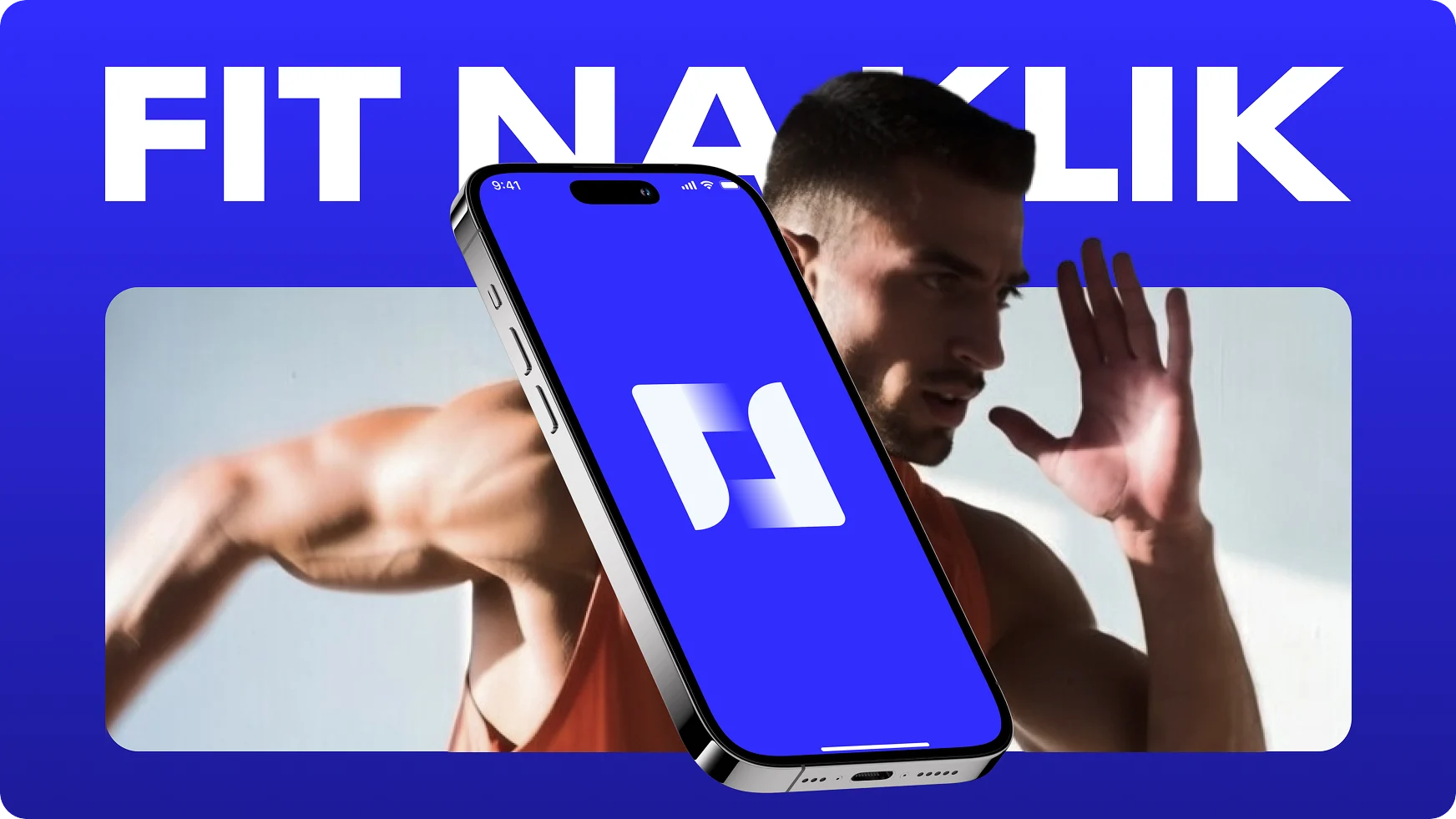
- B2B2C SaaS Architecture, Cloud Architecture, Mobile App Development, Pre-launch optimization, Product Discovery & BA, Provider Dashboard (ERP), QA engineering, UI/UX Design
- advanced filtering, automated account merging, Lottie, Node.js, React Native (iOS/Android), React.js (Next.js/Tailwind for admin/provider)
Croatia / Southern Europe
Pre-Launch Beta and stabilization
Fitness app development for a two-sided market
The fitness market in Southern Europe lacked a single platform that solved two problems at once: a tool for independent studio owners to digitize their operations without buying enterprise ERP software, and an app for users to book any fitness session, from Pilates to a local weight-lifting session. Fit na Klik partnered with Coderfy to build a two-sided B2B2C platform. The main work centered on a low-friction provider onboarding flow, a multi-tier credit-based monetization model, and Croatian localization (caps-based brand consistency and correct diacritic encoding).
What we built: three products, one platform
Fit na Klik is not one app. Three connected products share a single backend, and each has a different user in mind.
1. The consumer app (iOS & Android)
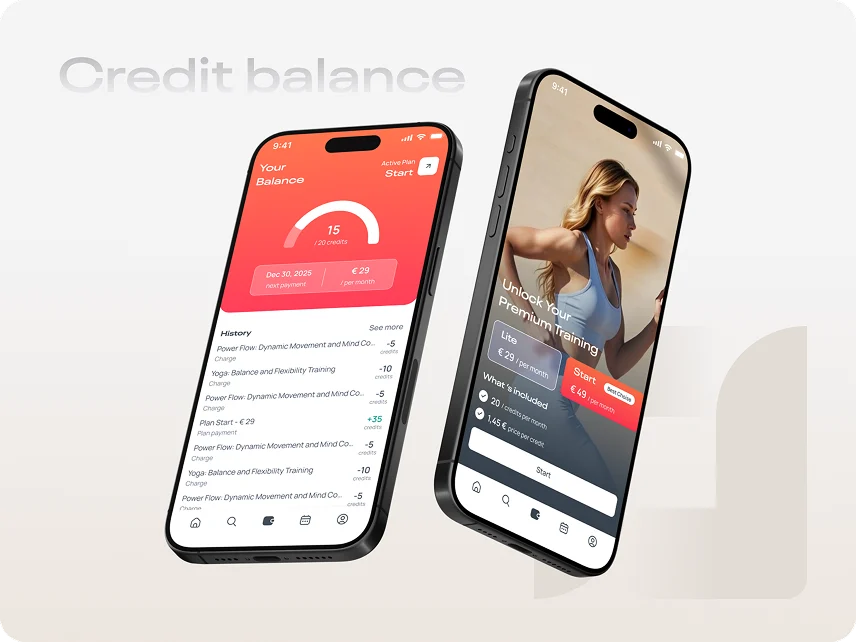
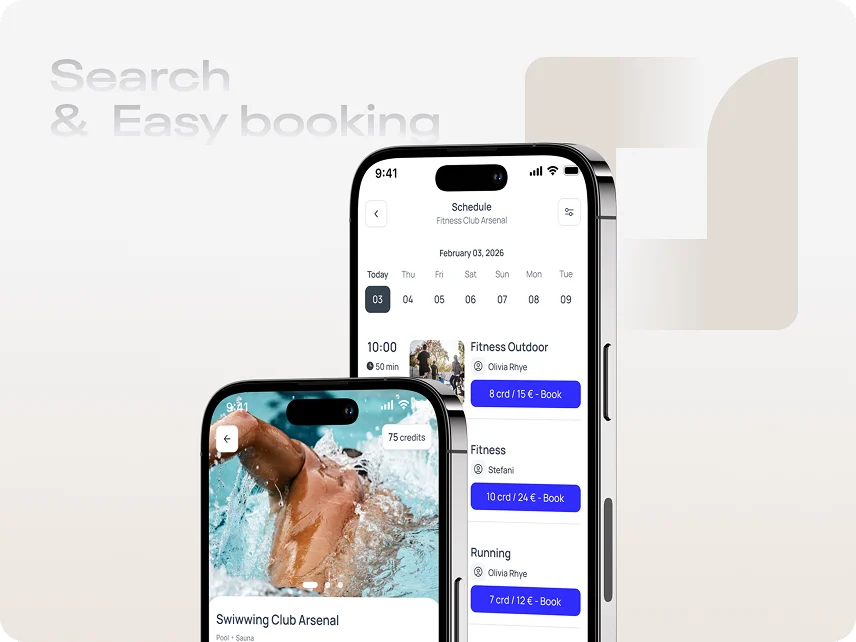
Users buy credit packs, find studios near them on a map, filter by activity, price or time, and confirm a booking in a few taps. A permanently visible credit balance sits in the header, so the user always knows what they have left.
2. The provider dashboard
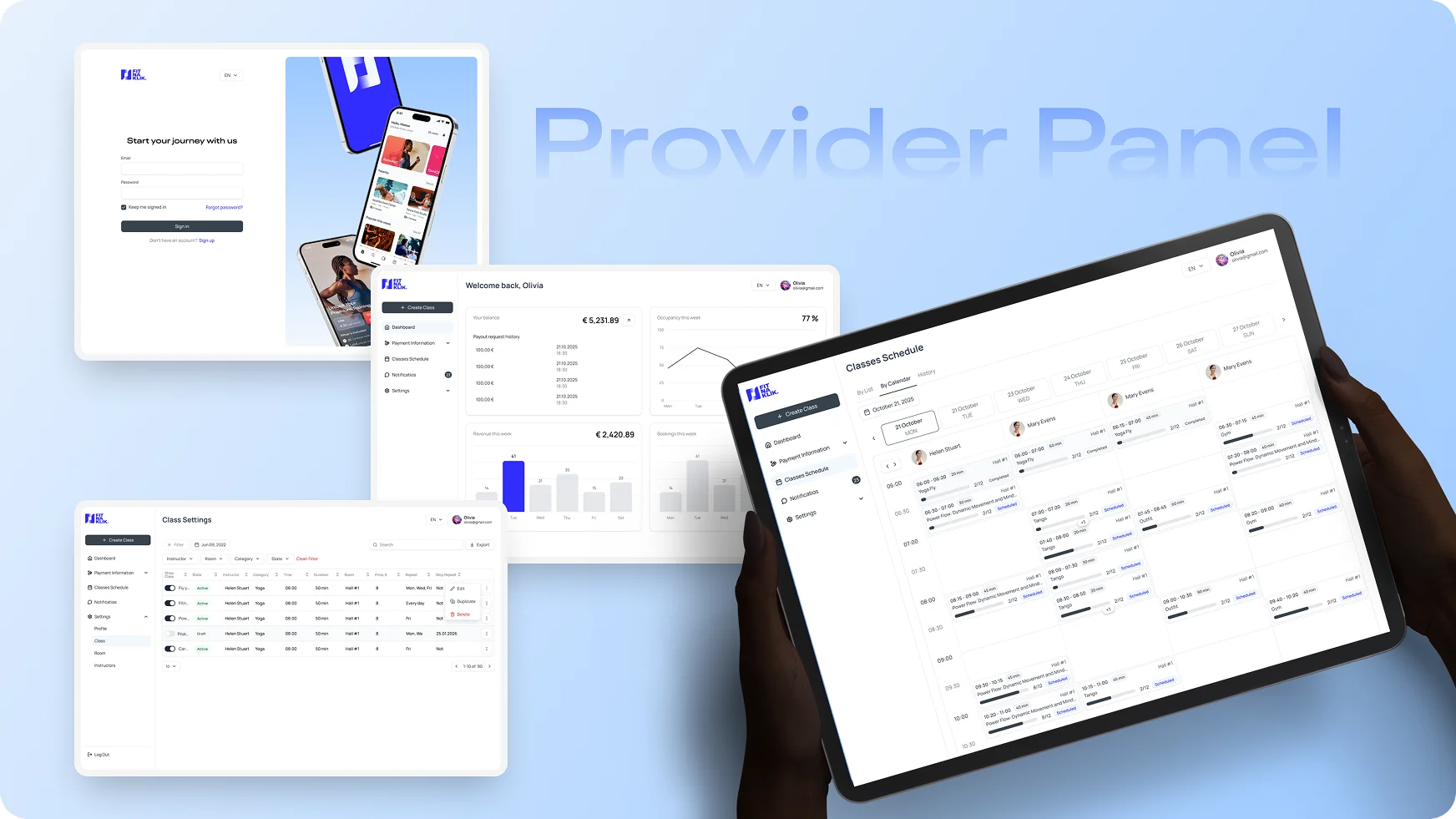
Where studio owners actually run the business: publish classes, manage schedules and instructors, and audit incoming credits. Multi-role access separates Owner, Manager and Instructor, so a gym can hand an instructor their own view without exposing finances.
3. The admin super-panel
The internal Fit na Klik team moderates studio applications, oversees platform-wide transactions, enforces cancellation rules and pulls analytics.
The credit model that makes the platform work
The commercial core of Fit na Klik is credits, not subscriptions. Users buy packs; studios get paid per attended session; the platform earns on the spread. Two mechanisms make that model hold up in practice.
Studio status tiers
Visibility is earned, not bought once. A studio is No Status on the free tier, becomes Verified after payment verification and manual admin review, or carries a temporary New badge for its first weeks. If a placement subscription lapses, the platform automatically drops the studio back to No Status — no manual chasing.
A single cancellation policy for everyone
Instead of letting each studio write its own rules, one system-level policy engine handles no-shows (credit and cash forfeiture) and late cancellations across the platform. Credit calculations run as atomic database transactions, so balances stay correct even when several studios and hundreds of users act at once. Fewer disputes, no ledger drift.
A 4-tier software infrastructure
We used an API-first architecture with multi-tenant data isolation, so each part scales independently under morning and evening peaks. Authentication runs through OAuth 2.0 and Firebase Auth with JWT sessions and native iOS/Android SDKs, supporting email, Google, Facebook and Apple ID. Search combines Google and Apple Maps with spatial indexing for fast radius queries. Provider access is governed by multi-tenant RBAC across Owner, Manager and Instructor tiers, and account merging is automated when a user registers with an existing phone or email.
B2C user mobile app (iOS & Android):
buy credit packs, find facilities via geolocation, filter activities, confirm reservations.
B2B provider portal (studio.fit-na-klik.com):
manage studio profiles, schedule workouts, audit inbound credits.
Studio status and monetization engine — a 3-tier badge framework:
- No Status: standard listing on a free tier with no premium assets.
- Verified: assigned after payment verification and manual admin authentication.
- New: a temporary badge for studios registered in the past week or month; if the placement subscription is not paid at the end of the cycle, the account drops to No Status.
Admin super-panel:
moderate applications, oversee ledger transactions, enforce cancellation caps, extract analytics.

Codified system requirements
| Module | Functional requirements | Technical criteria |
|---|---|---|
| Authentication | Registration/login for consumers and providers via Email, Google, Facebook, Apple ID; password reset | OAuth 2.0, Firebase Auth, JWT sessions, native iOS/Android SDK |
| Profile & credits | Personal data, membership tracking, a permanently visible "remaining credits" header | API ledger polling with payment gateways; balance refresh via WebSockets or REST hooks |
| Social & gamification | Friend lists, training share, achievement badges by workout volume or studio variety | Relational mapping of user nodes; event-driven badge handlers |
| Search | Search by geolocation, sports category, dates, live availability | Google Maps and Apple Maps APIs; spatial indexing for radius queries |
| Provider management | Multi-role studio profiles, course creation, booking limits | Multi-tenant RBAC across Owner, Manager, Instructor tiers |
Getting a fitness platform ready for a real market
Between a working build and a live product in Croatia sat a stabilization sprint. Three things mattered more than the rest.
Localization that actually reads correctly
Croatian diacritics broke across the interface, so text rendered wrong in places customers would notice. We fixed the encoding end to end and aligned the B2B labels with the terms studio owners actually use — the difference between software that feels imported and software that feels local.
Removing friction from studio onboarding
Providers were being asked for too much. We made the trainer phone number optional, and built an automatic image fallback so a course reuses the studio’s profile photo when no cover is uploaded — a studio can list a class in minutes instead of hunting for graphics.
Making the media pipeline hold up
Studio photos uploaded through the dashboard failed to render in the app. We rebuilt the flow into an image-processing pipeline that compresses each upload, generates WebP variants and serves them from CDN edge nodes — so listings load fast on a phone on mobile data.
Strategic decisions during product calls:
Dark theme by default:
lower eye strain for evening sessions. Filter redesign after UX UI test, splash animation for the logo on a preload page - everything that makes Fit-Na-Klik shine.
Automated course image fallbacks:
the platform reuses the studio profile image when a course cover is absent, so providers don't upload graphics per slot.
Centralized cancellation management:
a predefined system-level policy engine via the API handles No-Shows (credit and cash forfeiture) and Late Cancellations across the platform, removing per-studio custom copy and disputes.
What the Client Says
The Provider Panel looks absolutely great and intuitive. Coderfy successfully delivered a highly functional application that perfectly handles our complex credit system and automated payouts. The team was attentive to details, suggested great UI improvements like the interactive map, and ensured a smooth launch for both iOS and Web.

Planning a B2B2C marketplace or SaaS platform?
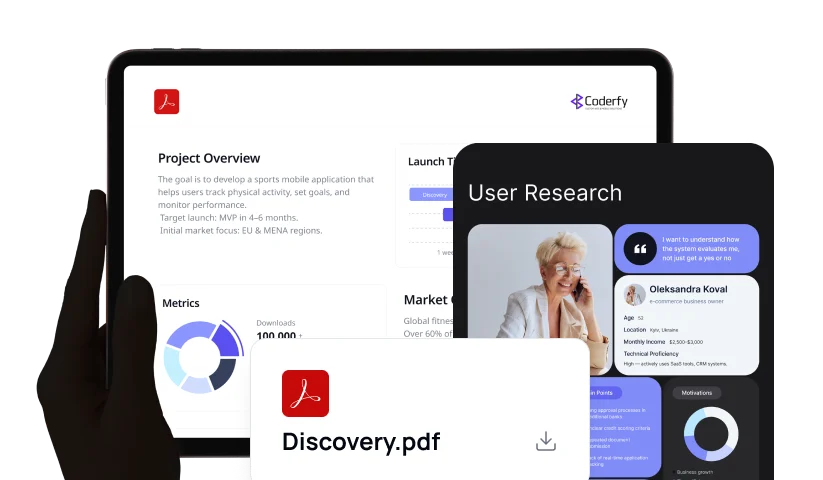
Discovery Phase ($300): in two weeks our CTO, engineers and business analysts deliver an RFP – database schema and API integration maps, formalized user stories with the monetization logic (credits, sub-tiers), and a fixed price mapped to milestones (MVP vs. Phase 2).
How does the platform handle high-resolution media without slowing app load?
An image-processing middleware compresses each upload, generates WebP variants and distributes them across CDN edge nodes, keeping payloads low and list rendering fast.
How are credit transactions structured to prevent ledger errors on cancellations?
Credit calculations run as atomic database transactions on the Node.js tier, triggered by timed cron processes. On cancellation, the engine checks the timestamp against policy rules and updates records in a single loop, preventing race conditions and refreshing the balance in the header.
How long does fitness app development like this take?
Fit na Klik was built as a full two-sided platform with discovery, design, three products and QA. A focused MVP on a proven core is faster — we scope the realistic path in a discovery phase before development starts.
Who owns the source code?
The client. Full source code and data ownership, with documentation and handover as part of delivery.
We’ve Got Answers
Making a white-label gym management software, multi-tenant fitness app or sports booking application – Coderfy knows how to do that.
Have a question about pricing?
Related projects
Croatia / Southern Europe
Pre-Launch Beta and stabilization
Saudi Arabia (KSA)
12 weeks to SAMA-compliant MVP
The engineering behind multi-tenant fitness app development
Fitness app development at this scale is a multi-tenant problem: the platform must keep strict data isolation across B2B providers while serving concurrent search for thousands of B2C users. When several studios update schedules, rosters or media at once, the API layer has to avoid concurrency bottlenecks and table locking without interface latency. For Fit na Klik, the B2B web system uses a modular component model for instant field validation and rendering before backend processing. Media sync across web and React Native is handled by image-scaling pipelines that convert source content into optimized formats. Multi-language states run through dictionary services that support extended diacritics. The centralized cancellation engine keeps platform business calculations consistent and removes cash-flow discrepancies. The client owns the source code and data.